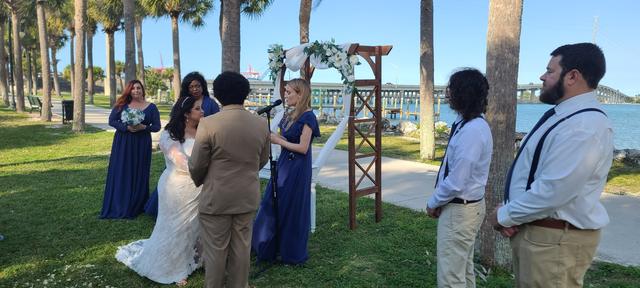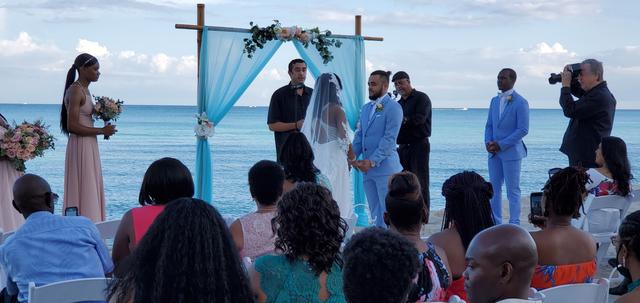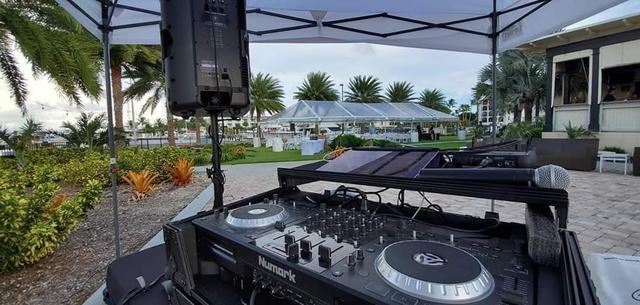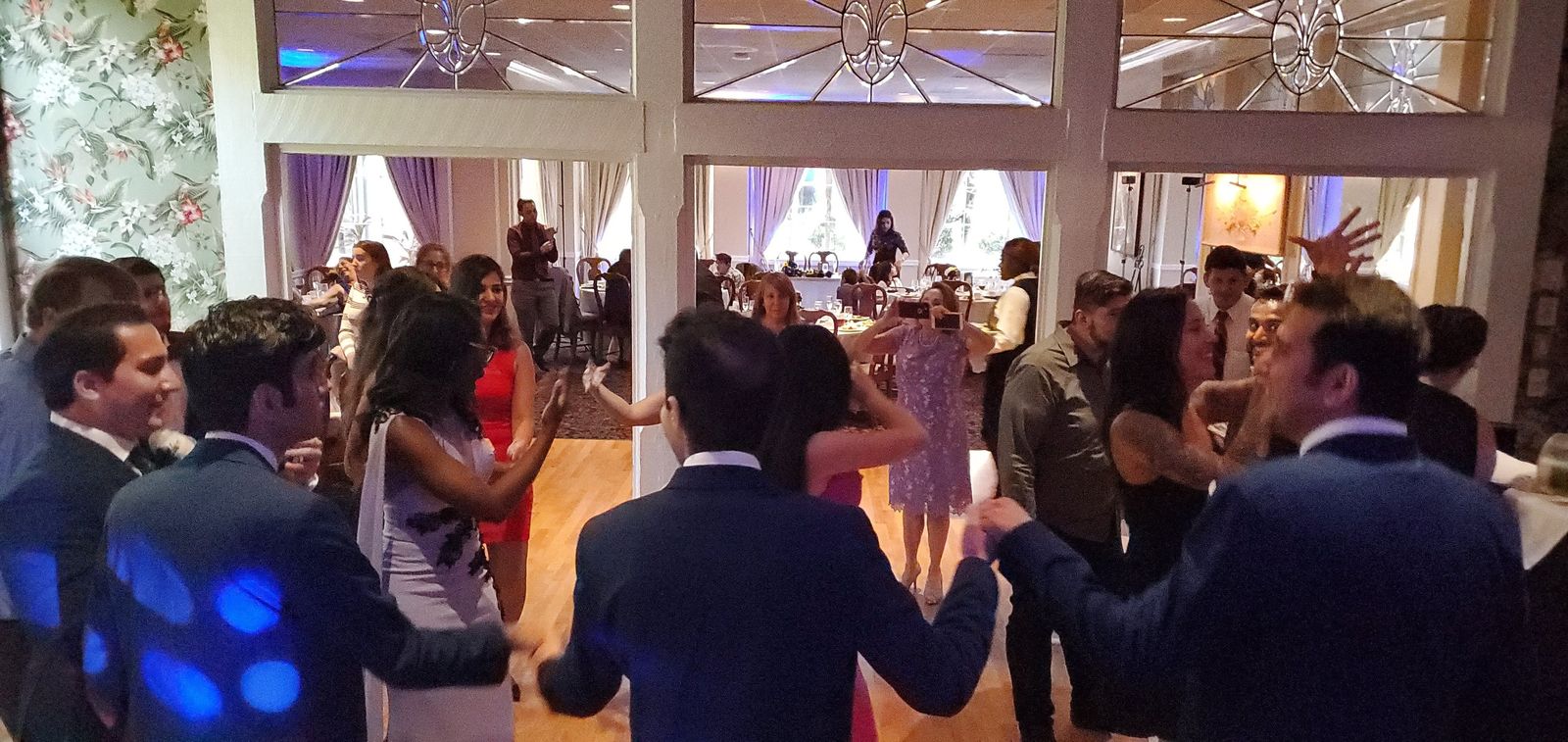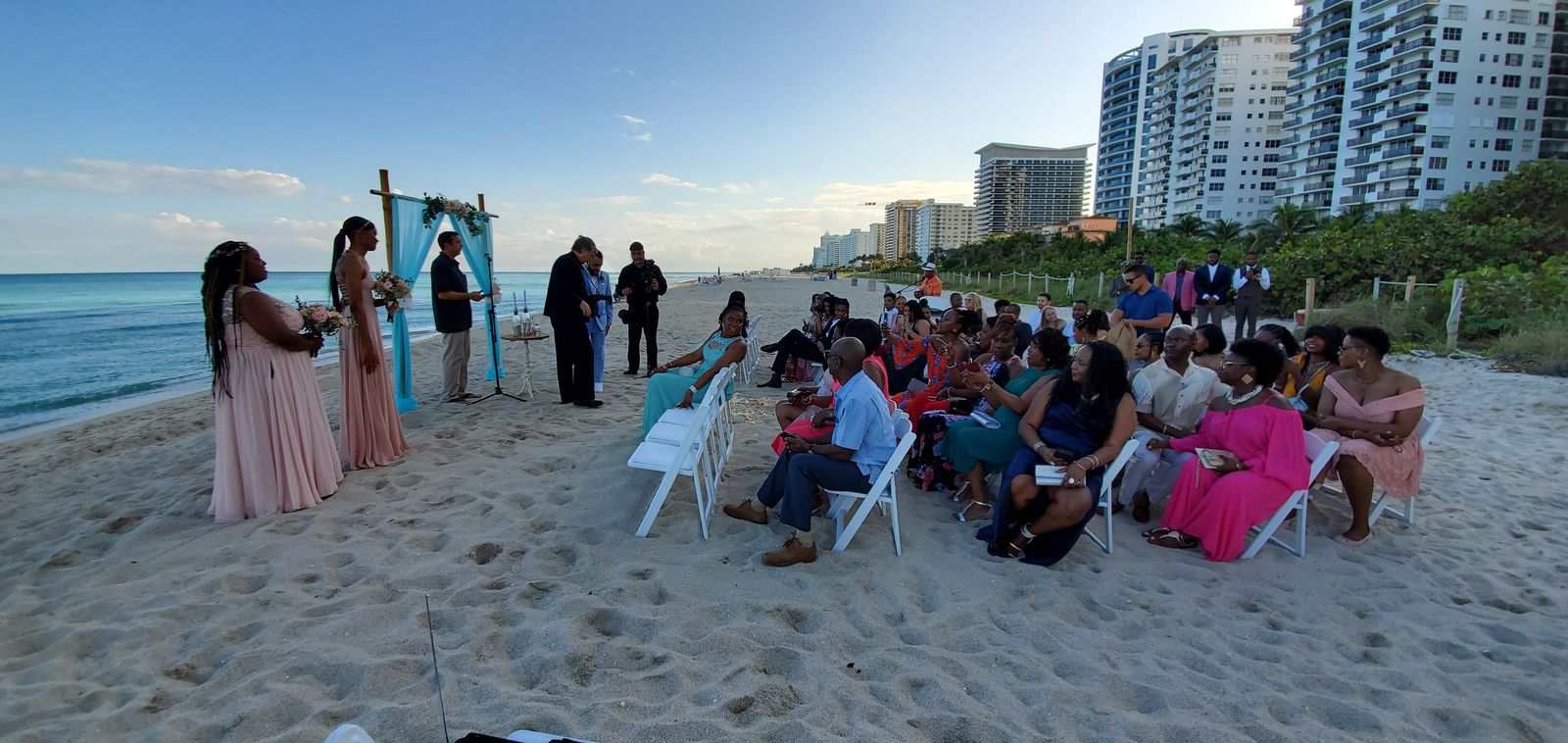
A beach ceremony is one of the most beautiful ways to get married in South Florida, and one of the hardest places to get good sound. Open space, constant wind, crashing waves and soft sand all work against you. The good news: with planning, every guest can hear every word. Here's what we've learned from beach and waterfront weddings since 1997.
The four enemies of beach sound
- Wind. The biggest problem by far. Wind blowing across a microphone creates a loud rumble that drowns out speech, and it carries voices away from guests.
- Surf noise. Waves create a constant wash of sound that masks quiet voices.
- Open space. Indoors, walls reflect sound back to listeners. On a beach, sound travels outward and disappears.
- Sand and heat. Sand gets into everything, makes stands unstable, and sun can overheat equipment.
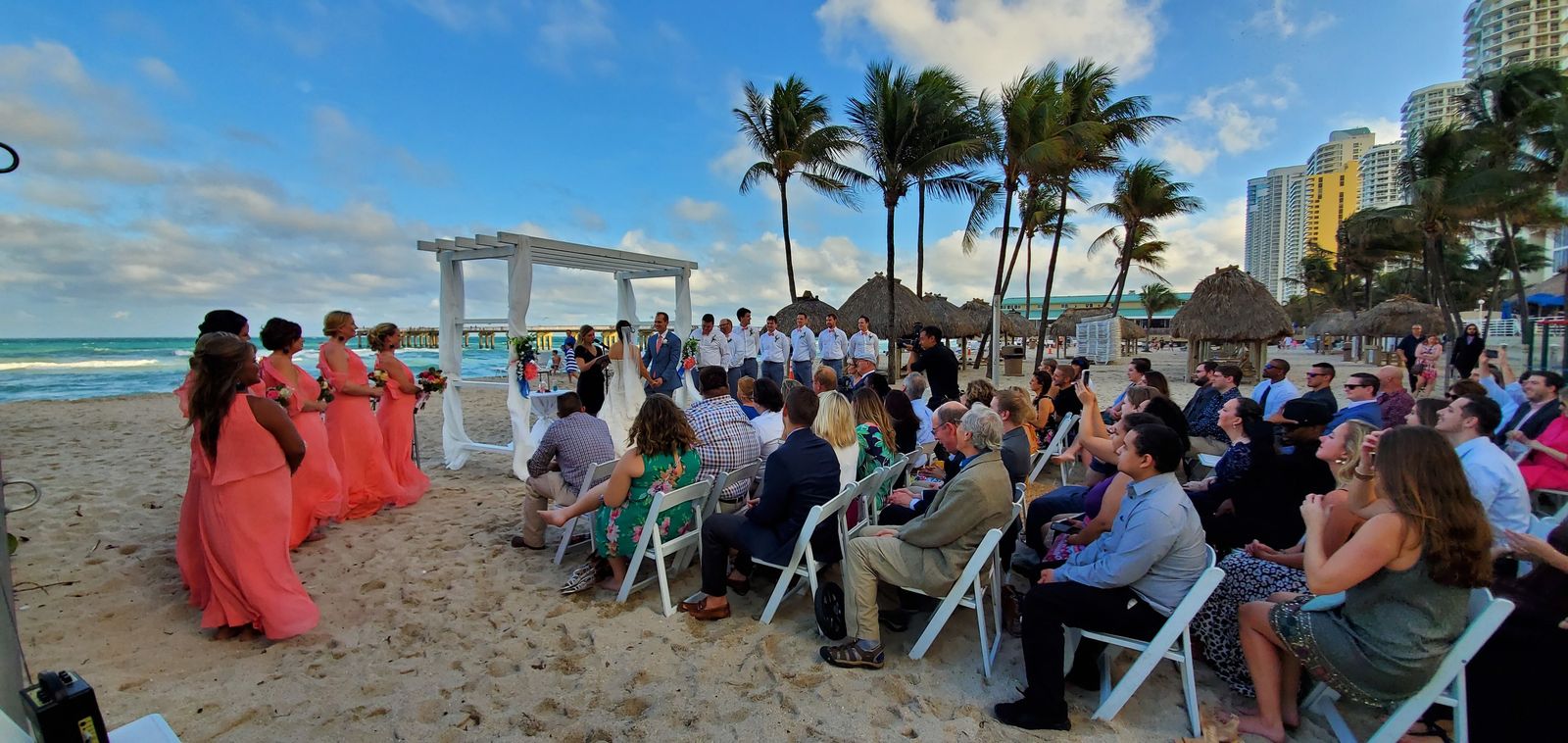
Microphones: the most important decision
- Use wind protection. Foam windscreens help; furry "dead cat" covers help more. A professional DJ should have these.
- Lavalier mics (clip-on) for the officiant and sometimes the groom can be good, but they need wind protection and careful placement inside the clothing.
- Handheld or stand mics for readers should be held close, about a fist's width from the mouth.
- Have a plan for the vows. Couples speak more softly than they think. A discreet mic close to the couple keeps every word audible.
Speaker placement
- Point speakers at the guests, not the water. Sound aimed out to sea is wasted, and sound aimed down the beach may bother other beachgoers.
- Place speakers slightly ahead of the seating, angled in, so the front and back rows both hear clearly.
- For larger guest counts, a second speaker further back helps the back rows.
- Stabilize stands. Sand bags or wide bases prevent tipping in a gust.
Power
Many beach sites have no outlets. Before booking, ask your venue:
- Is there power near the ceremony site? How far?
- Can we run a cable safely without crossing a walkway?
- If not, is battery-powered sound an option?
Tell your DJ the answers early. We'll plan the setup around them.
Permits and rules
Public beaches in South Florida cities often require a permit for a wedding ceremony, and rules may cover setup, amplified sound, chairs, arches, timing and cleanup. Requirements vary by city and change over time, so check with the city or your venue early. If you're marrying on a hotel's beach area, the hotel typically guides the process. Some permits or venues require vendor insurance; a professional DJ should be able to provide a certificate of insurance (COI). Starlight is insured, and we can provide one on request.
Timing and light
Southeast Florida's beaches face east, so the sun sets behind the beach, over land, not over the water. Late afternoon still brings gorgeous soft light, but it affects where guests face and when your photographer wants the ceremony. Talk with your photographer about timing, and confirm the ceremony start with your DJ so prelude music begins as guests arrive.
Heat and comfort
- Schedule ceremonies in late afternoon to avoid peak heat, especially May through October.
- Keep ceremonies short and sweet (20–30 minutes).
- Offer water, fans or parasols. Comfortable guests listen better.
- Protect equipment from direct sun with shade or covers.
Weather backup
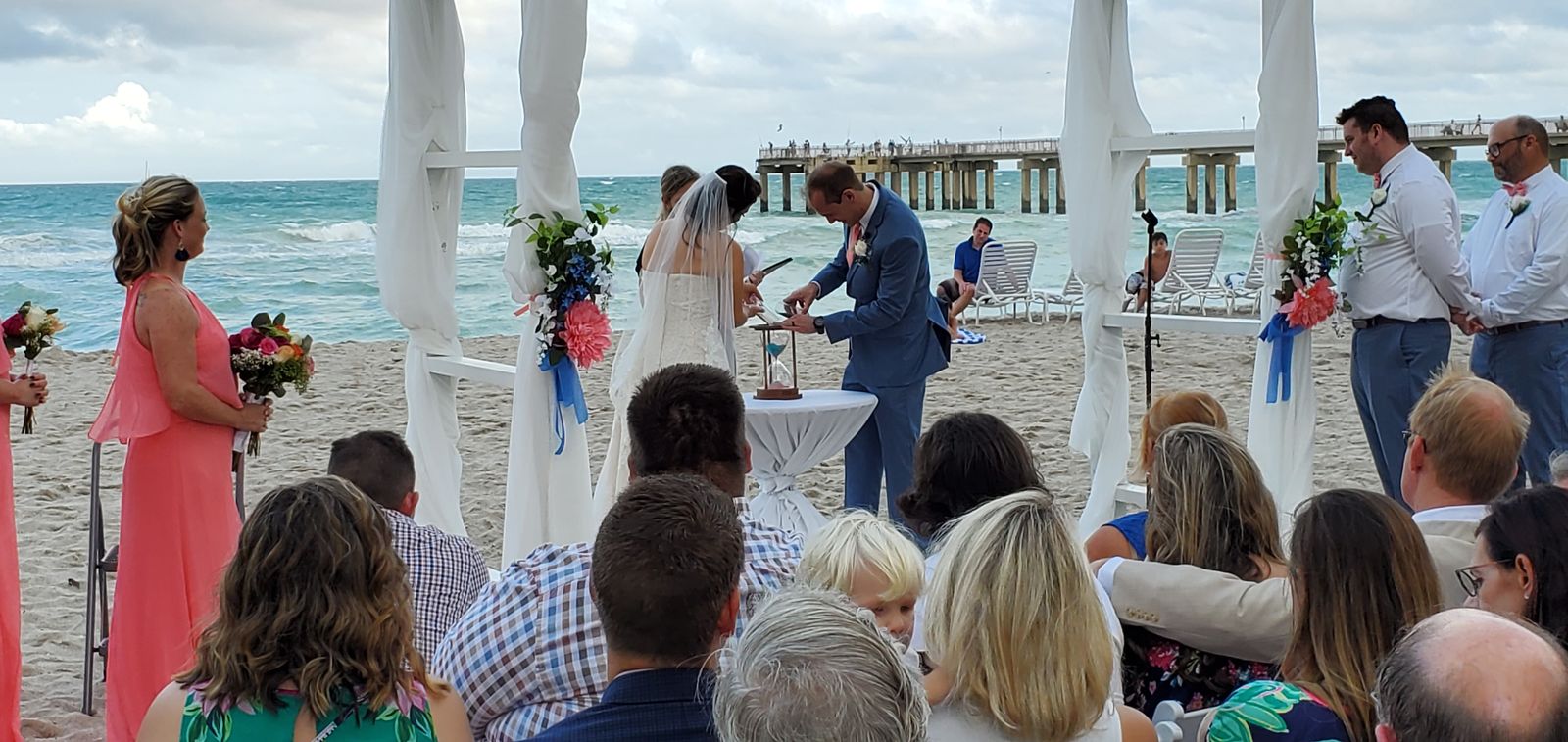
Summer brings fast-moving afternoon storms, and hurricane season runs June 1 through November 30. Every beach ceremony needs a backup plan, ideally an indoor or covered space at the reception venue. Decide in advance who makes the call and when. If the backup is used, your DJ should be ready to set up there quickly.
Music choices for the beach
Open-air settings favor music with clear melody and not too much bass, which gets lost outdoors. Acoustic covers, strings and steel-drum or tropical instrumentals sound beautiful by the water. See our page on ceremony and cocktail-hour music for more ideas.
City guides
Planning a beach wedding? See our guides for Miami Beach, Fort Lauderdale and Delray Beach.
A beach ceremony sound checklist
Before the wedding day, run through this list with your DJ and planner:
- [ ] Ceremony location confirmed, including how far it is from the nearest power source
- [ ] Permit requirements checked with the city or the hotel, including any sound or amplification rules
- [ ] Lavalier mic for the officiant, and a handheld mic for vows and readings
- [ ] Wind screens on all microphones
- [ ] Speakers placed to cover the back rows, not just the front
- [ ] Processional, recessional and any special song cues confirmed, with the right edits for the length of the walk on sand
- [ ] Shade or cover for the DJ setup and equipment
- [ ] Weather backup location and a decision deadline
- [ ] Timing confirmed around the light, and around tide if your spot is close to the water
- [ ] A plan for moving guests, and music, from the ceremony to cocktail hour
A beach ceremony takes more planning than an indoor one, but the payoff is a ceremony your guests can actually hear, in one of the most beautiful settings South Florida has to offer.
Talk to us
Call or text (561) 464-7203 or request a quote. Learn more about our wedding DJ service.